
Normandale Lake Carp Harvest Video
Ongoing studies of carp aid in removal process
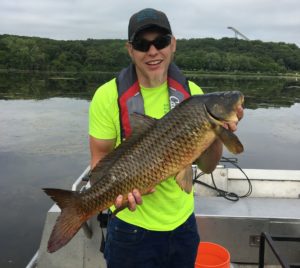
The District has been studying carp in Normandale Lake since 2018, as part of a larger project to manage the health of the lake. Carp are an invasive fish that cause water quality problems due to their bottom feeding behavior. They stir up lake bottoms, which reduces water clarity and releases phosphorus, a nutrient that fuels algae growth. They also uproot aquatic vegetation, destroying habitat for waterfowl and aquatic communities.
Two past fish surveys (2018 fish survey and 2019 fish survey) indicated that carp were at a level in Normandale Lake where management of the population was recommended for water quality purposes. Carp management began in 2020, with the removal of approximately 5,000 carp from the lake. Removal efforts are continuing this summer, with the help of WSB. We are also continuing to study more about the carp population in the lake, so we can efficiently manage it.
This summer, the City of Bloomington is partnering with the District and District volunteers to bait box nets with corn. Using corn as bait targets the carp and teaches the carp to group up in one particular spot over the nets in the lake. The nets are then pulled up, and the carp removed.
Learn more about carp management at Normandale Lake by watching this YouTube video:
View video transcript
Last year we removed over 5,000 large carp in the lake. We’ve been partnering with the watershed district on work out here at Normandale Lake for the last few years. I tend to serve as the liaison and help coordinate if the watershed district calls and says, “Hey, can you line up some volunteers to help bait traps?” Well, carp pulling is part of a larger phased project for Normandale Lake. The City of Bloomington and Nine Mile Creek Watershed District have been very interested in trying to improve the overall water quality and ecological health of Normandale Lake. Watershed District undertook a study back in 2017 to look at the water quality and potential projects to improve it.
Carp management is one of those to try to help reduce the internal load or nutrient loads coming from the sediment. As the carp root up the sediment, and when they kick up that mouthful of mud or sediment on the bottom of the lake, it turns the mud into the water column, which makes it really murky. It also releases phosphorus, which in turn is essentially food for algae blooms which we’ve been seeing are a big problem around the metro area for sure. They’re also uprooting small plants that are in the lake, which are good for the lake because they are habitat for things like bluegill sunfish, which then are food for bass and pike, which are the fish that we all like to angle for and catch. And so they can have an effect on the environment that disrupts the bottom of the food chain of fish in our lakes that we think of as a healthy ecosystem.
The district has been undertaking a carp management analysis in the lake to determine how many carp we have and also to try to put antennas in them so they follow where they go so we can best find places to remove them. Carp have the ability to traverse through almost little or no water, so places that are swamps or little creeks, even if most the time they’re dry, and then eventually wash their way into lakes. And then once they’re in a lake chain, they can move sometimes freely between them. So we find out also where they’re moving and when, and if that information comes about where we can use that for management, then that’s another opportunity to keep their numbers down.
So the process with these baited box net traps: first we install them in places that we feel that they’re going to be appropriate, where number one, we’re seeing lots of carp sort of around the area. They don’t catch any non-target fish; they’re very targeted to common carp. And we train those fish over a number of days with this bait, and we keep replenishing it every day as they eat through it all. And that means that they’re learning that if I return to this spot every day, then I’ll get free food. And then we use that to our advantage to plan a time to come and raise the outer walls of the net, and if we do that quickly they don’t have enough time to be disturbed and leave the area where the net is around them. And then once we get them in the net, we pull a boat up to them, to the side of the short side of the net, and we corral them over to one end and we just roll whatever we’ve caught into the boat.
We have strict guidelines on what we can do with these carp once we remove them. We act under a Minnesota DNR research permit and we can either bury them, incinerate them, or donate them to the licensed commercial fishermen of the area. So we’ll have these traps running at least through the end of August and maybe into September too to see how we’re doing, and we’ll compare that to our population estimates on how effective we are at getting a chunk of the population out of the lake. It’s going to be a continual program until our analysis gets ourselves in a steady state. We’ll never remove all the carp, but we want to make sure we get to a place where we can readily manage it and they’re just not overtaking the lake.
Learn more about the Normandale Lake Water Quality Improvement Project at our Current Projects page: