Goldfish go away!
Goldfish in Minnesota lakes
Goldfish have been making quite a stir recently, and not just in the news. This invasive species, alongside the related carp, stir up the bottom of lakes with their feeding habits. This creates cloudy water, and releases nutrients that can cause algae blooms. Because of these issues, lake management organizations across Minnesota are asking people not to release their pet fish or aquarium plants into the wild. Surrender them at a re-home event instead.
The Nine Mile Creek Watershed District is also undertaking fish studies in lakes in Edina and Bloomington to understand their populations better. In this Minnesota Bound episode (filmed in 2020) you can see the research team in action starting at around 1:20, as they collect information on goldfish in the Lake Cornelia system in Edina.
View video summary
An episode of the TV show Minnesota Bound. The first segment covers invasive goldfish in Edina’s lakes.
A research crew uses electrofishing on Lake Cornelia to estimate how many goldfish live there, catching nearly 50 in about 11 minutes. Researchers believe the population started with pet goldfish dumped into the lake, which can multiply into the thousands. The fish lose their bright orange color over time and within a year or two grow too large for predators to eat. The crew implants small tracking tags so monitoring stations around nearby lakes can follow where the fish travel, which will help shape a management plan. Goldfish also stir up silt and cloud the water. A Hennepin County aquatic invasive species specialist asks people never to release pet fish into lakes.
The rest of the episode is unrelated to the District: Hopkins police officers take local kids fishing on Lake Minnetonka, and the hosts take an ATV trip through the Black Hills of South Dakota.
What is the District doing?
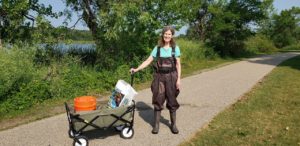
The Nine Mile Creek Watershed District is conducting ongoing studies and management efforts at Normandale Lake and the Lake Cornelia system for carp and goldfish. With the expertise of WSB, the District’s consultant, and the help of numerous volunteers, nets are set out in the lakes and baited with corn to attract carp and goldfish. The corn will teach the fish to group up in that area, allowing researchers to more accurately assess population numbers and remove carp and goldfish. This study is part of larger projects to improve the health of the lakes.
How can you help?
If you have unwanted aquarium fish or plants, never dump them in a lake, creek or pond! Always surrender them at a re-home event.
Additionally, the District needs volunteer help. Volunteers will bait fish nets with corn. The corn is designed to group up carp and goldfish in the area of the fish net. Once the fish are trained to group in the area, WSB will net and remove the carp or goldfish from the lake. A minimum of one week (Monday-Friday) commitment and approximately 5-10 hours per week is required to volunteer. Training and materials are provided. Contact Erica if you are interested in volunteering for a week this summer.
Watch this short video to learn more about baiting nets with corn for goldfish and carp removal, and how you can volunteer to help:
View video summary
A Nine Mile Creek Watershed District video showing volunteers how to bait box nets so invasive common carp and goldfish can be removed from Normandale Lake and Lake Cornelia. These fish crowd out native fish and stir up sediment on the lake bottom, releasing phosphorus that feeds algae.
The District provides waders, two 5-gallon buckets, mesh bags, and zip ties; a wagon or wheelbarrow helps carry everything. To bait a net:
- Put on waders and line a bucket with a mesh bag.
- Pour in about half a bag of corn (25 pounds), keeping it all in the bucket so it doesn’t attract geese.
- Cinch the bag closed and tie an extra length of cord around the top.
- Gently place the bag inside the ring of poles in the lake, and tie it to the nearest pole.
- Scatter some corn around the bag to draw fish in.
Baits are checked every day and refilled as the fish eat the corn. Once fish are feeding regularly, the net around the bag is pulled up to catch them.
Learn more about District projects
Lake Cornelia & Lake Edina Improvement Project
Lake Cornelia fisheries assessment
Normandale Lake Improvement Project