Minnetonka
Project Overview
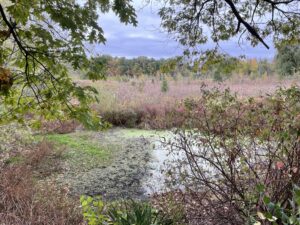
The Whited Fen Restoration Project will protect and improve the nine-acre wetland along Whited Avenue in Minnetonka through the removal of invasive plants and re-establishment of native habitat.
Whited Fen is classified as a rich fen floating mat, a rare wetland type within the watershed. The wetland supports unique native plants, including uncommon species such as cranberry and cotton grass. Invasive species are encroaching on these native communities, and without intervention, the long-term health of the fen will decline.
Why This Project Matters
In 2022, the Nine Mile Creek Watershed District (NMCWD) completed a watershed-wide wetland assessment to identify high-priority restoration opportunities. The study identified four wetlands for further analysis, with Whited Fen ultimately selected as the highest priority for restoration.
NMCWD believes the wetland can be protected through an adaptive management approach that includes invasive species removal, establishment of native wetland buffers, landowner education, and public access improvements.
Project Goals
- Improve wetland health by removing invasive species such as buckthorn and cattails.
- Protect water quality and habitat by establishing upland buffers where feasible to reduce erosion, nutrient loading, and future invasive species establishment.
- Preserve the wetland long-term through education, community involvement, and partnerships with the City of Minnetonka and adjacent landowners.
Project Details
In 2022, the Nine Mile Creek Watershed District (NMCWD) completed a study that looked at all wetlands within the watershed and highlighted which wetlands are priority to be restored. The study identified four wetlands for further analysis, and ultimately the Whited Fen was prioritized for improvements first.
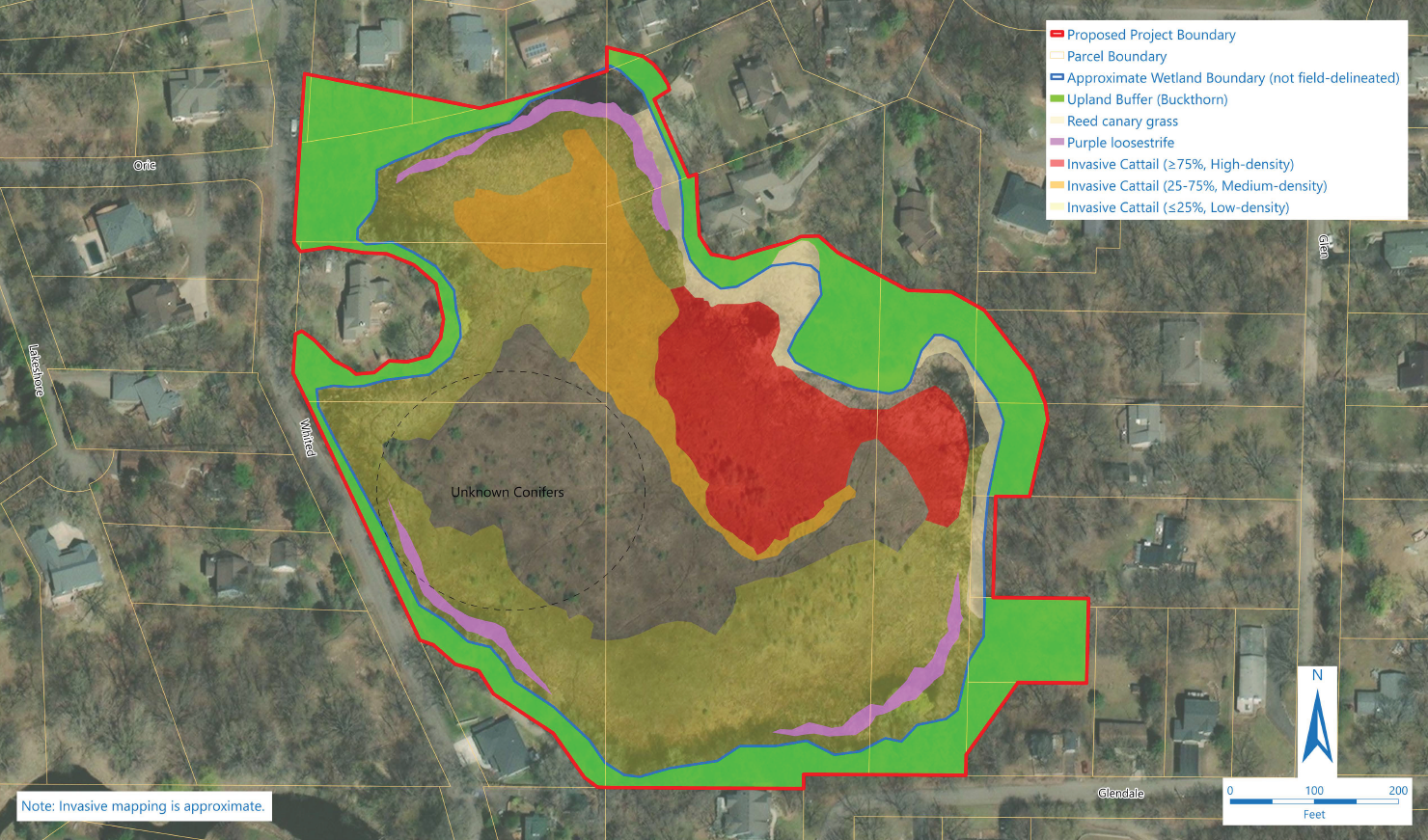
Planned restoration activities include:
- Removal of invasive vegetation.
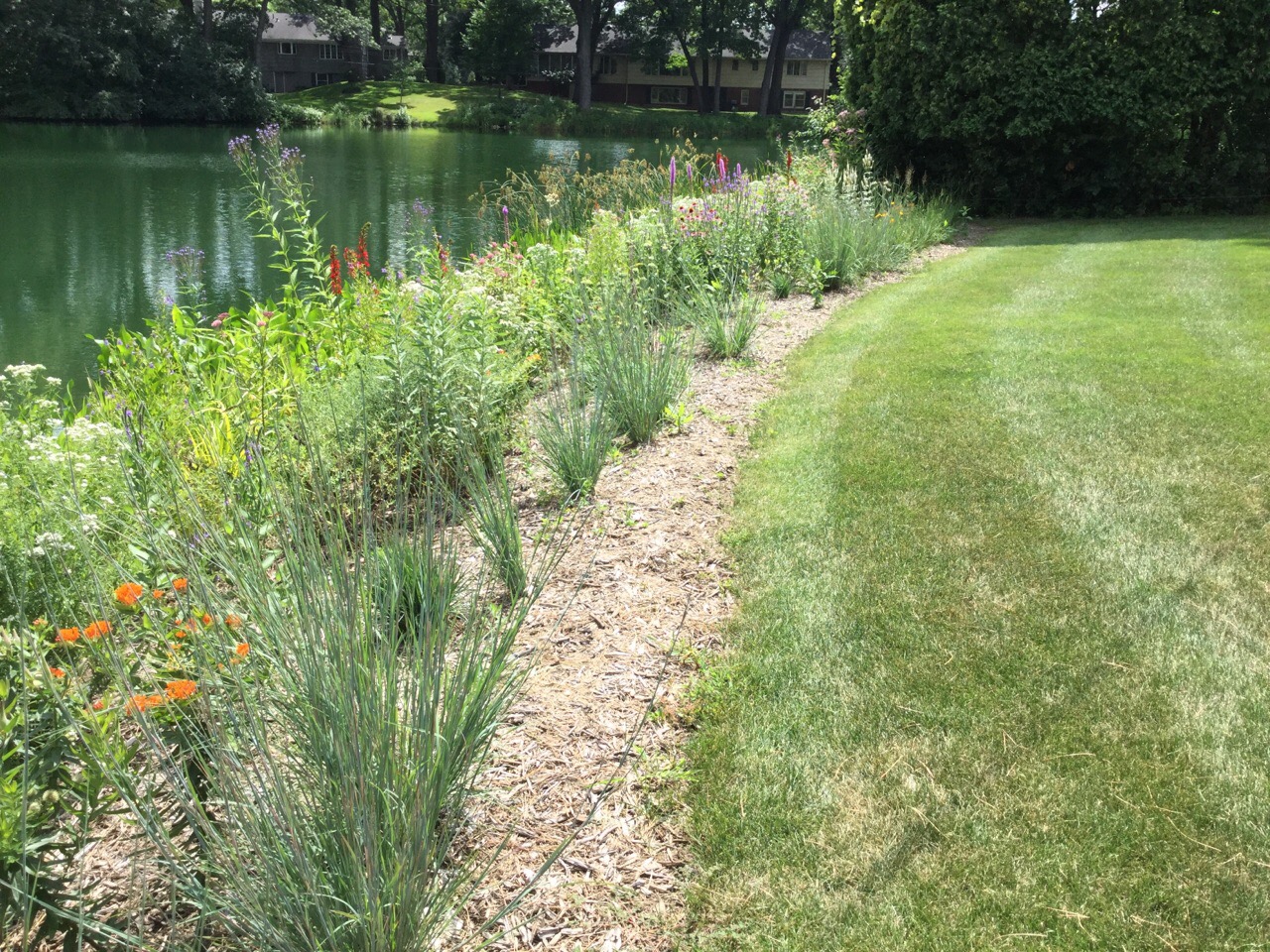
- Establishment of native wetland buffer plantings.
- Ongoing adaptive management and monitoring.
- Landowner outreach and education.
- Construction of a wetland viewing platform and interpretive signage on city property.
Project Benefits
- Nine-acres of high-quality wetland habitat restored
- Up to two-acres of new wetland buffer
- Improved views and accessibility to the wetland from city property
Project Timeline:
- Early 2023: Landowner engagement.
- March–June 2023: Community meetings and landowner site walk.
- September 2023: NMCWD Board of Managers ordered the project.
- April 2024: Community meeting.
- June 2024: Volunteer buckthorn removal event.
- Summer/Fall 2025: Collaborate with consultant RES to complete the restoration plan.
- Summer/Fall 2026: Acquire landowner access easements.
- Future Construction: Restoration work will begin once design, permitting, and access agreements are complete.
Project Updates:
Latest Update: As of May 2026, NMCWD is working with consultant RES to develop the restoration plan and prepare for future implementation. Landowner access easement discussions are anticipated in 2026.
Community Engagement:
- March 6, 2023: A community meeting was held at the Glen Lake Activity Center to discuss the restoration project. Topics included the importance of the wetland and the public’s role. Download the Presentation (PDF)
- June 8, 2023: A walk was organized for adjacent landowners to discuss restoration strategies and tour a nearby habitat restoration site.
- April 25, 2024: Another community meeting was held. Download the Presentation (PDF)
- June 13, 2024: Buckthorn Bust! Interns and volunteers worked hard to remove invasive buckthorn
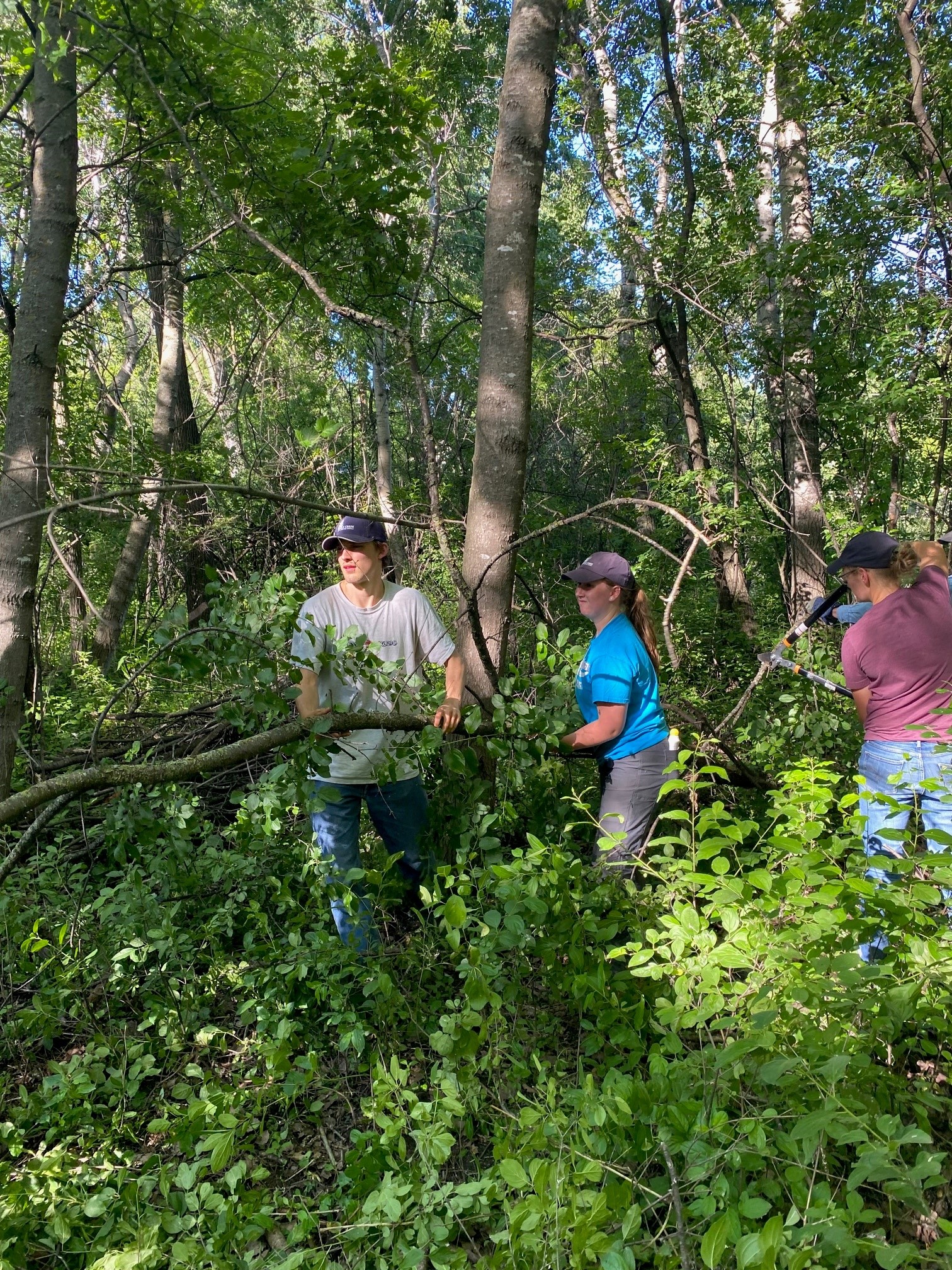
Interns removing buckthorn
Resources
- Whited Fen Wetland Restoration Fact Sheet (PDF)
- Wetland Assessment Report (PDF)
- High Quality Wetland Scoping, Prioritization, and Feasibility Report (PDF)
Questions?
Contact Brett Eidem, Project and Planning Manager, at beidem@ninemilecreek.org or 952-658-9271.