Bloomington
Background:
The district conducted a study on the Anderson Lake Chain that looked at the following:
- Historical in-lake data i.e. lake nutrient levels, aquatic plant populations, fisheries, and lake levels
- An analysis of upland habitat and land-use
- Reevaluation of lake goals and management techniques
Based on the findings from this study, on August 19, 2026, the NMCWD Board of Managers ordered a project to modify the outlet between Southeast and Southwest Anderson Lakes.
Southeast Anderson Lake has experienced relatively low water levels since completion of the Northwest and Southwest Anderson Lakes drawdown project in 2008. Review of monthly lake level data indicates that a water level control structure and required macrophyte screen, which were installed for the drawdown project, have hindered the movement of water from Southwest Anderson to Southeast Anderson.
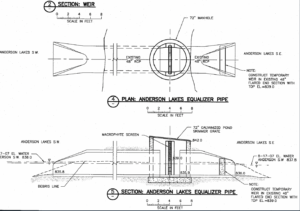
The Anderson Lakes Protection Strategy study (2026) reviewed three potential solutions to address water level equalization of the Anderson Lakes with considerations for minimizing the movement of two aquatic invasive species (AIS) from Southeast Anderson to downstream waterbodies (Eurasian watermilfoil, curly-leaf pondweed). Of the three alternatives evaluated, the identified option that would allow for water level equalization in the near-term while minimizing the movement of AIS and addressing City of Bloomington maintenance concerns was alternative three, outlet reconstruction.
Project Details:
The concept design for the outlet reconstruction included:
- Removing all existing storm infrastructure and replacing with a new control structure and storm pipe.
- Designing the control structure to allow water to flow from Southwest Anderson to Southeast Anderson under low water level conditions to promote water movement across the basins.
- Designing the control structure to allow flow from Southeast Anderson to Southwest Anderson under high water conditions, but requiring discharge to flow through a screen to minimize the movement of AIS downstream.
- Considerations for long-term maintenance access.
The scope of work for this project builds off of the data analysis and concept design developed during the Anderson Lakes Protection Strategy study.
Tentative Project Timeline:
August-September 2026: Kick-off meetings
August-October: 2026 Field investigations and desktop review
October 2026-April/May 2027: Final design
January-May 2027: Environmental permitting
April/May-June 2027: Bidding and contracting support
October 2027-June 2028: Construction administration and oversight
April 2027: Presentation to MNCWD Board of Managers
Questions?
Contact Jordan Wein, Water Resources Project Manager, at 952-800-8307 or jwein@ninemilecreek.org