Bloomington
Project Overview:
The Nine Mile Creek Watershed District and the City of Bloomington are implementing a multi-stepped approach to improve the health of Normandale Lake—a shallow lake with a large, urban watershed. To date, projects include a lake drawdown (2018-2019), aluminum (alum) treatment (2019), herbicide treatments (2020-2026), and carp management.
About Normandale Lake
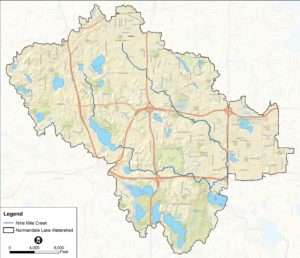
Normandale Lake was created as part of a flood control project in the late 1970s by the District and City of Bloomington in an area of natural marsh land. A permit for the construction of the lake was issued by the Army Corps of Engineers, which limits some management options for Normandale Lake, such as aquatic vegetation harvesting and dredging on the western half of the lake. Normandale Lake is a shallow lake (three-foot average depth). This means aquatic plants naturally grow throughout the lake. A robust, native aquatic plant population is part of a healthy shallow lake.
Normandale Lake receives water from a drainage area of over 34 square miles, including water from six different cities. The water flows into the lake through Nine Mile Creek and stormwater pipes. Nutrients, such as phosphorus and nitrogen, from sources such as grass clippings, tree litter, lawn fertilizer, and sediment from paved surfaces and erosion travels with this water. This is called external nutrient loading. Internal loading is when phosphorus is released from lake bottom sediments. Excess nutrients can fuel algae growth in the lake.
Normandale Lake is not currently on the state’s impaired waters list but does frequently have phosphorus levels that exceed state standards (>60 µg/L). Historically, Normandale Lake has met the chlorophyll-a and Secchi disc depth standards for shallow lakes.
Project Goals
Improve the water quality and the ecological health of Normandale Lake by:
- Controlling invasive curly-leaf pondweed
- Improving the diversity of native plant species
- Reducing phosphorous
- Controlling the invasive carp population
Project Details:
The Normandale Lake Improvement Project has involved multiple lake management strategies to achieve project goals.
Lake Drawdown
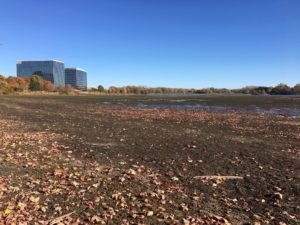
Curly-leaf pondweed is an invasive plant that out-competes native aquatic plant communities. The plant can also contribute to high phosphorous levels in a lake when it dies off and decays mid-summer. A drawdown is one way to control curly-leaf pondweed. Curly-leaf pondweed primarily reproduces through vegetative propagules called turions. The plant produces turions in late spring, the turions remain dormant in the sediment through the summer, and then germinate under cooler water conditions in the fall. A winter freeze of the lake sediment bed (while the lake is empty of water) can kill the turions, thus stopping the curly-leaf pondweed’s reproductive cycle.
Curly-leaf Pondweed Herbicide Treatment
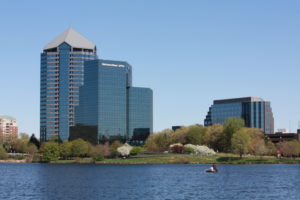
The lake drawdown decreased the amount of curly-leaf pondweed in the lake. Follow-up herbicide treatments were planned as part of the project to manage any curly-leaf pondweed that remained following the drawdown. The District assesses the need for an herbicide treatment yearly, based on plant surveys. Current project plans include up to five years of treatment, after which the effectiveness and long-term sustainability of the curly-leaf pondweed management strategy will be re-evaluated. Partial lake herbicide treatments have occurred from 2020-2026.
Alum Treatment
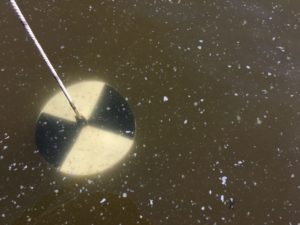
Aluminum sulfate treatments help control internal phosphorous loading in lakes, reducing the phosphorus available to fuel algae growth. The Normandale Lake alum treatment was conducted in 2019, after the lake refilled from the drawdown.
Carp Management
Carp are an invasive species of fish. They stir up lake bottom sediments while feeding which reduces water clarity and releases phosphorus. They also uproot aquatic vegetation, destroying habitat for waterfowl and aquatic communities.
Since 2020, the District has been working to manage carp population levels in Normandale Lake. Since 2020, over 7,500 carp have been removed from Normandale Lake.
Learn more about carp management at Normandale Lake by watching this YouTube video:
Fisheries Management Resources:
Integrated Pest Management Plan for Common Carp in Normandale Lake_1/26/23
Project Monitoring
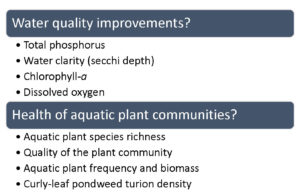
The District is implementing a comprehensive targeted monitoring program to assess the effectiveness of the Normandale Lake Project management activities as they are implemented. This will allow the District to evaluate the ongoing need for additional or repeat management activities. The District will conduct monitoring activities to measure water quality, particularly phosphorus, the health of the aquatic plant communities in Normandale Lake, and to measure the amount of curly-leaf pondweed in the lake.
Project Updates:
A partial lake herbicide treatment to control curly-leaf pondweed has completed in May 2026.
Project Timeline:
- 2017 Lake Report
- Summer 2018-Spring 2019: Lake drawdown
- 2019: Alum Treatment
- 2018 – Present: Carp management
- 2020-2026: Partial lake herbicide treatments
- Water quality monitoring results from 2024: 2024 Annual Water Monitoring Report
- Water quality monitoring report 2024: Normandale Lake
Questions?
Erica Sniegowski, District Administrator, 952-658-9024, esniegowski@ninemilecreek.org