Plantings along a shoreline provide many critical benefits to the health of lakes and creeks.
Restore Your Shore
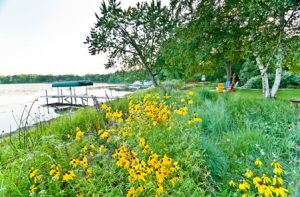
Shoreline and streambank plantings create natural buffer areas between lakes and creeks and upland areas.
Buffer zones planted with native species help:
- Reduce erosion
- Provide bank stabilization
- Filter stormwater runoff
- Provide wildlife habitat
- May reduce algal blooms
Grants
Nine Mile Creek Watershed District provides Cost Share grants for shoreline restoration projects that take place within District boundaries.
Resources
DNR’s Restore Your Shore
Blue Thumb- Planting for Clean Water
The Buffer Zone (PDF)
View video summary
An animated video from the Anoka Conservation District about how lakeshore owners can protect the health of their lake.
It explains that Minnesota’s many shallow lakes are especially sensitive. Runoff from yards and streets carries extra nutrients that feed algae, and when shoreline and aquatic plants are removed, the shore erodes and the water turns murky. Invasive species like Eurasian watermilfoil, zebra mussels, and invasive carp add to the harm.
The video then walks through steps lakeshore owners can take:
- Use lake-friendly lawn care: rain barrels, rain gardens, picking up pet waste, maintaining septic systems, and keeping grass clippings out of the lake.
- Fix erosion with native plants, trees, and shrubs whose roots hold the shore in place, rather than relying on rock riprap alone.
- Plant native buffers along shoreline that isn’t used for water access. Buffers filter runoff, provide wildlife habitat, and discourage geese.
- Avoid clearing aquatic plants like water lilies, which hold the lakebed in place and shelter fish, frogs, and turtles.
- Watch for aquatic invasive species and report new infestations.
It closes by noting that a healthy shoreline can still include a dock and lawn space, and that lakes are healthiest when neighbors work together.