Nine Mile Creek Watershed District
Common Lake Management Treatments:
Hebicide Treatments:
Herbicides are used to control invasive aquatic plants in lakes. One common example ion an invasive aquatic plant s curly-leaf pondweed. Reducing invasive species can help protect and restore native aquatic plant communities and may also decrease phosphorus levels in the water, depending on the species.
The Nine Mile Creek Watershed District (NMCWD) selects herbicide types and treatment approaches based on the specific needs of each project, guided by scientific data and engineering recommendations.
In-lake Alum Treatment
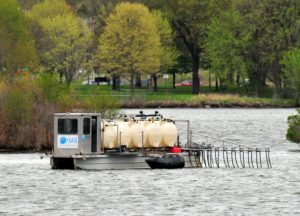
Alum treatments are used to lower phosphorus levels in lakes and prevent phosphorus from leaching out of lake bottom sediments. Phosphorus is a nutrient that feeds algae, so reducing it can help prevent excessive algae growth.
During treatment, trained contractors apply liquid alum to the lake using specialized equipment that ensures it is distributed evenly and accurately. When alum enters the water, it forms a soft, cloud-like substance called “floc.” This floc binds with phosphorus, creating a compound that does not dissolve in water—so the phosphorus can no longer fuel algae growth.
Once on the lake bottom, it forms a thin layer that continues to trap phosphorus release from the sediment.
Overall, alum treatments can help make the water clearer and can reduce the frequency and severity of nuisance algal blooms.
Enhanced Street Sweeping
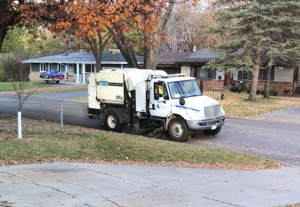
Enhanced street sweeping goes beyond routine sweeping by focusing on areas where organic debris—like leaves and twigs—builds up the most. By removing this material before it enters storm drains, it helps reduce the amount of phosphorus and other pollutants that reach our lakes.
Lake Aeration
Lake aeration adds oxygen to the water. Oxygen helps treatments using aluminum and iron work better. When there is enough oxygen, iron can continue to hold onto phosphorus, keeping it out of the water. By keeping oxygen levels up, aeration helps these treatments stay effective longer. Aeration can also help prevent fish kill.
Goldfish & Carp Management
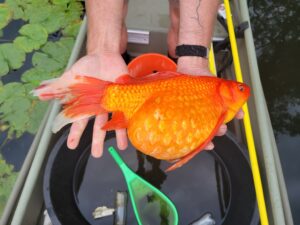
To improve water quality and the overall health of local lakes, the district is working to manage invasive goldfish and carp populations.
Goldfish and carp can harm lakes because they feed along the bottom, stirring up sediments. This makes the water murky and releases phosphorus, which can lead to algae growth. They also pull up aquatic plants, damaging important habitat for birds and other aquatic life.
Many goldfish populations begin when people release pet fish into lakes or ponds. Public awareness is vital to prevent new introductions of these destructive fish.
Lake Draw Down:
Curly-leaf pondweed is an invasive plant that out-competes native aquatic plant communities. The plant can also contribute to high phosphorous levels in a lake when it dies off and decays mid-summer. A drawdown is one way to control curly-leaf pondweed. Curly-leaf pondweed primarily reproduces through vegetative propagules called turions. The plant produces turions in late spring, the turions remain dormant in the sediment through the summer, and then germinate under cooler water conditions in the fall. A winter freeze of the lake sediment bed (while the lake is empty of water) can kill the turions, thus stopping the curly-leaf pondweed’s reproductive cycle.
